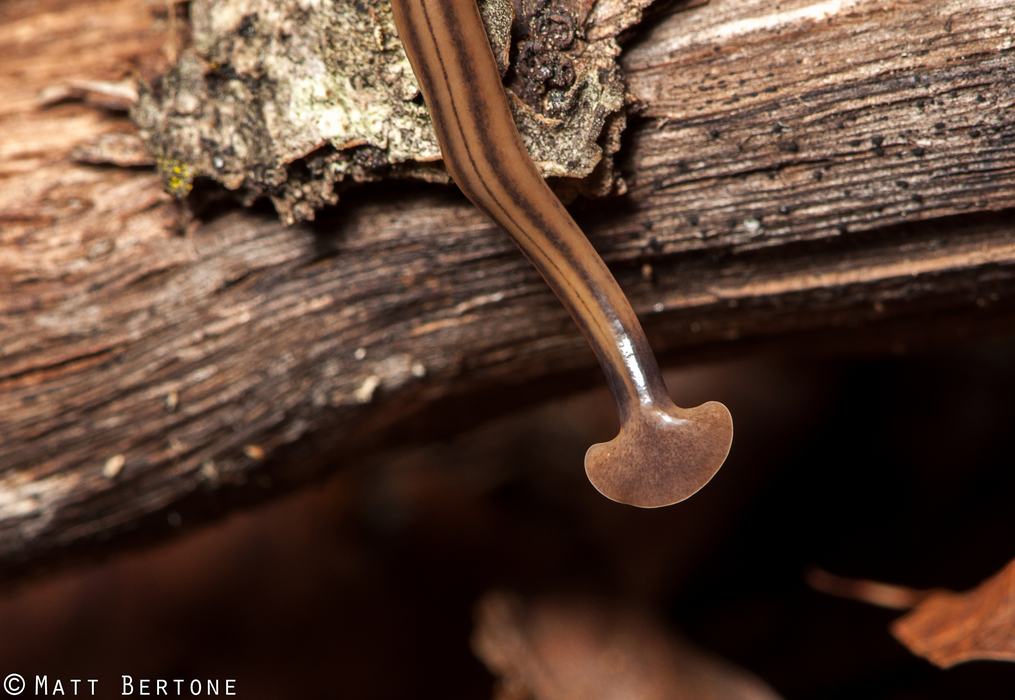
For the past couple of weeks the Extension Office has received numerous calls about the hammerhead worm (Bipalium kewense). It isn’t new or dangerous but it does look alarming in a horror movie sort of way. This particular worm is one of several flatworm or terrestrial worms that inhabit North Carolina. The hammerhead worm has been seen in NC since 1951and is called hammerhead because of it’s large, hammer-shaped head. They can grow up to a skinny twelve inches with five black stripes running down their bodies with a broken collar around the neck of the worm.
They live in dark moist places such as under rocks, in leaf litter or under flower pots. Their spread in North Carolina is surprisingly attributed to the movement of houseplants and soils that come from tropical regions. They are active at most times of the year and are fiercely predatory, feeding on earthworms, snail, slugs and other insects. They wrap themselves around their prey and suck the liquid parts of their victim into their mouth that is located about midway down the underside of the body.
Hammerhead worms are hermaphrodites which means they have both male and female sexual organs. They reproduce by either mating and laying cocoon-filled eggs or by simply breaking apart and making two worms. Their rapidly increasing numbers in some areas is likely caused by their ability to regrow from half a worm.
While it is possible that the earthworm population could be decreased by the hammerhead worm, earthworm production operations are more susceptible to damage. If these worms are found on your property, carefully collect them and drop them in alcohol. It is suggested that gloves be worn due to some slightly poisonous properties that might exist in the worm. Always wash your hands with warm, soapy water after handling.
Don’t be overly alarmed by the presence of hammerhead worms in your yard. Chances are they have been there for some time but due to the very rainy weather that we have experienced this spring, they are simply looking for some high ground and are being spotted on sidewalks and driveways.